WW2 Strategy: Tower Defense
- 4.4
- Rating
- 5.00M
- Installs
- Free
- Price

 Analysis by App-foxy
Battle Strategy: Tower Defense is the kind of strategy game I open when I want a focused tactical challenge rather than a quick tap-through distraction. Developed by Zygle Games, it puts its World War II setting behind a defensive, decision-heavy format: I have to think about positioning, timing, and how to survive pressure instead of simply moving from one short fight to the next. The free entry point makes it easy to try, while the “hardcore” tone is a useful warning that this is not necessarily a relaxed tower-defense game.
After spending time with it, my impression is that its biggest appeal comes from the way it asks me to plan before reacting. The presentation is built around tactical battles, but the real question is whether I can make limited choices work when the battlefield becomes crowded. That makes it a better fit for players who enjoy learning from mistakes than for anyone looking for a purely casual game.
How the game feels in ordinary play
The first thing I notice is the pace. A tower-defense game can feel slow when every wave is predictable, or exhausting when it throws constant action at the player without giving enough time to think. Battle Strategy: Tower Defense sits closer to the deliberate side. I usually have a moment to read the situation, decide what deserves attention, and consider whether a defensive choice will still make sense several moments later.
You May Also Like

 Blood Strike: 2.5 Anniversary
Blood Strike’s Loadouts Turn Every Drop Into a Tactical Gamble
A close look at Blood Strike’s custom loadouts: how fast access to signature weapons reshapes its battle royale rhythm, rewards preparation, and narrows the gap between fights.

 Pandora - Music & Podcasts
Pandora’s Music Is Easy to Start, but Harder to Recover
Pandora’s strength is its low-effort path from a seed to a station. Its weak spot is how much confidence it asks you to place in connection, setup, and quiet recovery.

 8 Ball Pool
 Is Built on Rivalries, Rematches, and Routine
A close look at the rivalries, rematches, shared routines, and unanswered safety questions that turn a quick pool match into a persistent mobile community.

 Samsung Music
’s Quiet Strength Is Playing What You Already Own
Its reach comes less from spectacle than from dependable access to a personal library. That simplicity is both the app’s strongest retention engine and its ceiling.

 AccuWeather: Weather Radar
AccuWeather Review: A Quick, Clear Forecast for Everyday Decisions
For everyday plans, the best forecast is the one you can understand quickly. AccuWeather makes rain timing, radar, and local conditions easy to act on, with a few trade-offs.

 Hill Climb Racing
Why Hill Climb Racing Still Turns Crashes Into One More Run
A tiny car, a bumpy hill and one more upgrade: Hill Climb Racing keeps resurfacing because its simple chaos makes every near-miss feel personal.
More From Our News Desk



That slower rhythm is important because the World War II theme could easily have been handled as a simple visual wrapper. Here, the setting supports the feeling of a campaign built around pressure and resistance. I do not play it like an arcade shooter. I play it by watching the shape of an encounter, identifying where a mistake will hurt most, and accepting that a failed attempt can teach me more than a rushed victory.
The best way to approach each battle is to treat the opening as preparation, not as a race. I avoid spending every available resource immediately. Holding something back gives me room to respond when the battlefield changes, and that habit is more valuable than trying to create the strongest-looking defense at the start. This is one of those small decisions that separates a thoughtful run from a frustrating one.
The game’s short store description is simply “Battle Strategy,” and that is a fair summary of the experience. It does not suggest a large role-playing system or a social hub; the attraction is the tactical problem in front of me. Players who want a clean, combat-focused strategy loop should understand the appeal quickly. Players expecting a broad historical simulation may find the experience more compact than the theme implies.
What happens when the screen gets busy
The most demanding moments arrive when several threats need attention at once. That is when a defensive layout that looked sensible a moment earlier can begin to feel fragile. I have to decide whether to strengthen a weak point, preserve a useful position, or prepare for the next push instead of reacting only to what is already visible.
Those moments also reveal the game’s main mental cost. It is not necessarily difficult because every action is complicated. It is difficult because several ordinary decisions can combine into one serious consequence. A small error in where I commit resources may leave me with too little flexibility later. For that reason, I recommend taking a few seconds to observe the flow before making a permanent-feeling choice.
One practical routine helps considerably: after a failed attempt, I change only one part of my approach on the next run. If I move everything at once, I cannot tell which decision fixed the problem. Testing one adjustment at a time turns defeat into useful information and keeps the game from becoming a cycle of random retries. This is especially helpful for players who normally abandon tower defense after a difficult stage.
Heavy-use sessions can also feel more demanding simply because the game keeps asking for attention. I would not describe it as ideal background entertainment. If I am watching something else or checking messages constantly, I lose the thread of the battle and make poorer choices. It suits a short, concentrated break better than a game I can play half-awake.
Recovery after a mistake
A good strategy game should make recovery possible without making earlier decisions meaningless. In my experience, Battle Strategy: Tower Defense encourages me to recover by adapting rather than by hoping the same plan suddenly works. When a defensive line starts to fail, the useful question is not only “How do I stop this wave?” but also “What caused the weakness to appear?”
This gives the game a satisfying learning curve, although it can also make the early experience feel unforgiving. Someone unfamiliar with tower-defense habits may need several attempts before recognizing which choices are causing trouble. I would have preferred a gentler introduction for complete beginners, but the challenge is part of the reason experienced strategy players may stay with it.
My strongest recovery tip is to protect flexibility. A perfect-looking opening is less valuable than a setup that still gives me options when the battle develops differently than expected. I also avoid treating every lost position as worth saving. Sometimes the better decision is to accept that the current attempt is compromised, study the failure, and restart with a clearer plan rather than spending more time trying to rescue it.
This matters in everyday use. If I have only a few minutes before leaving home, I can still play, but I prefer starting when I know I can concentrate. A rushed attempt is more likely to end in an avoidable mistake, and the game’s tactical nature means that a distracted session does not feel rewarding. For a commute or a waiting room, it can work well if I want active engagement; it is less suitable if I need something effortless.
Stability, loading expectations, and everyday reliability
Battle Strategy: Tower Defense is available as a free game, and Zygle Games has kept its current version at 1.15.1.1. That makes the version detail useful when checking compatibility or deciding whether an older installation needs attention. I would still keep the game updated through the normal app channel, particularly if a device behaves differently after a system update.
From a user perspective, reliability is not only about whether a game opens. It is also about whether the battle remains understandable when I return to it, whether a mistake feels connected to my choices, and whether the experience is consistent enough for practice to matter. The tactical design benefits from that consistency: if the game feels unpredictable for technical reasons, it becomes harder to distinguish a strategic error from a performance problem.
I would not install it expecting the same instant, disposable feel as a very lightweight puzzle. The World War II tactical presentation and defensive battles suggest a more involved experience, so I give it a little more patience when launching or moving between play sessions. In return, I get a game that rewards attention rather than trying to fill every second with noise.
Recovery is another practical consideration. If I stop playing after a difficult attempt, I want to return with a clear idea of what I was testing. I find it useful to remember one simple lesson from the previous battle rather than trying to memorize an entire sequence. That makes it easier to resume after a break and prevents the game from feeling like a test I must constantly retake from the beginning.
The large player response also suggests that the concept has reached a substantial audience: the game has passed five million installs, with an average rating of 4.4 from roughly one hundred eighteen thousand ratings. Those figures do not guarantee that it will suit my particular taste, but they do make it less of an obscure experiment and more of an established option in mobile strategy.
How much the device matters
The minimum operating-system requirement is Android 7.0, so the game is accessible to a broad range of Android devices. That does not mean every phone will deliver the same experience. Older hardware may handle a tactical game comfortably in one situation and feel less comfortable during busier battles, especially if the device is already managing several apps in the background.
I would close unused apps before a longer session, keep some storage space available, and avoid judging performance while the phone is unusually hot. These are ordinary precautions, but they matter more in a game where visual congestion and quick decisions arrive together. If the device is struggling, the problem is not only visual smoothness; delayed responses can make a defensive decision feel less precise.
Battery use is also worth considering without assuming that every phone will behave identically. A player who spends a long time repeating difficult battles should monitor the device’s temperature and battery level. I prefer shorter focused sessions on an older phone, while a newer device is more likely to make extended practice comfortable. The game’s strategic structure supports that approach because I can stop after learning something meaningful instead of needing to complete a long story segment.
The game is rated Everyone, which makes its accessibility broad from a content-rating perspective. That should not be confused with difficulty. The age rating tells me about suitability of content, while the “hardcore” positioning tells me to expect more demanding decisions than the rating alone might suggest. Parents choosing it for a younger player may want to check whether that player enjoys repeated tactical failure rather than assuming it will be a simple children’s game.
Free to start, but not friction-free for every player
The free price is a clear advantage for trying the core experience without committing money first. At the same time, in-app purchases range from $0.99 to $119.99 per item. That is a wide span, so I would approach the purchase system carefully and decide in advance whether I want to spend anything at all.
For me, the healthiest way to use a free strategy game with optional purchases is to treat spending as a convenience choice, not as part of the basic strategy. I first learn the game’s decisions without buying my way through frustration. If a purchase becomes tempting only because I have just lost, I wait. That pause helps me decide whether I genuinely value the game or simply want to erase a difficult moment.
This is one area where the game may not be right for everyone. Players who dislike any in-app purchase presence should choose a paid strategy title with a simpler business model instead. Players who are comfortable with optional spending can try the game for free, but should still use device purchase controls if children share the phone.
Who will enjoy it, and who should choose something else
I recommend Battle Strategy: Tower Defense to players who like tactical repetition, defensive planning, and the satisfaction of improving through observation. It is particularly suitable for someone who enjoys asking why a battle failed and then testing a better answer. The historical setting adds character without replacing the strategy, so it works for players who want a World War II flavor but do not require a detailed simulation.
I would be more cautious recommending it to someone who wants a calm, low-effort game. The need to monitor pressure and revise decisions means it demands active attention. It is also not my first choice for a player looking primarily for fast reflex action, broad character collection, or a story-driven campaign. A conventional arcade game, a relaxed puzzle, or a larger role-playing strategy title may be a better match depending on that preference.
Compared with casual tower-defense alternatives, this game feels more interested in the player’s decisions than in constant rewards. Compared with complex PC-style strategy games, it is easier to approach on a phone because the central activity stays focused on tactical battles rather than managing an entire nation or economy. That middle position is its strongest identity: more demanding than a disposable mobile diversion, but more contained than a sprawling strategy simulation.
There is also a useful distinction between playing to win and playing to understand. If I need a guaranteed victory every time, the harder moments may feel unfair. If I enjoy gradually recognizing patterns in my own mistakes, the same moments become the reason to continue. That difference in attitude will probably determine whether the game feels rewarding or tiring.
My performance verdict
After weighing its pace, attention demands, device considerations, and free-to-start model, I see Battle Strategy: Tower Defense as a focused strategy game rather than a universal recommendation. Its strongest quality is the way it turns a World War II defensive scenario into a series of decisions that reward patience. I like that I can improve through better planning instead of relying only on faster tapping.
The main friction is equally clear: the game expects concentration, and its challenge can make short, distracted sessions feel unproductive. Older devices may require sensible background-app management, while players sensitive to in-app purchases should set boundaries before starting. Those are not reasons to avoid it automatically, but they are important parts of the decision.
With over five million installs and around one thousand nine hundred written reviews alongside its strong average rating, it has found a sizeable audience. More importantly for my recommendation, it has a clear purpose. Battle Strategy: Tower Defense is best when I want a demanding tactical break that rewards learning, not when I want effortless entertainment.
If that sounds like the kind of challenge you enjoy, I think the free download is worth trying before making any purchase decision. Give the opening battles your full attention, preserve some flexibility instead of spending everything immediately, and judge the game after learning from a failure rather than after one rushed attempt. For players who enjoy that process, this Android strategy game offers a compact and suitably demanding way to spend a focused session.
FAQs for WW2 Strategy: Tower Defense
01What are the main features of Battle Strategy: Tower Defense?
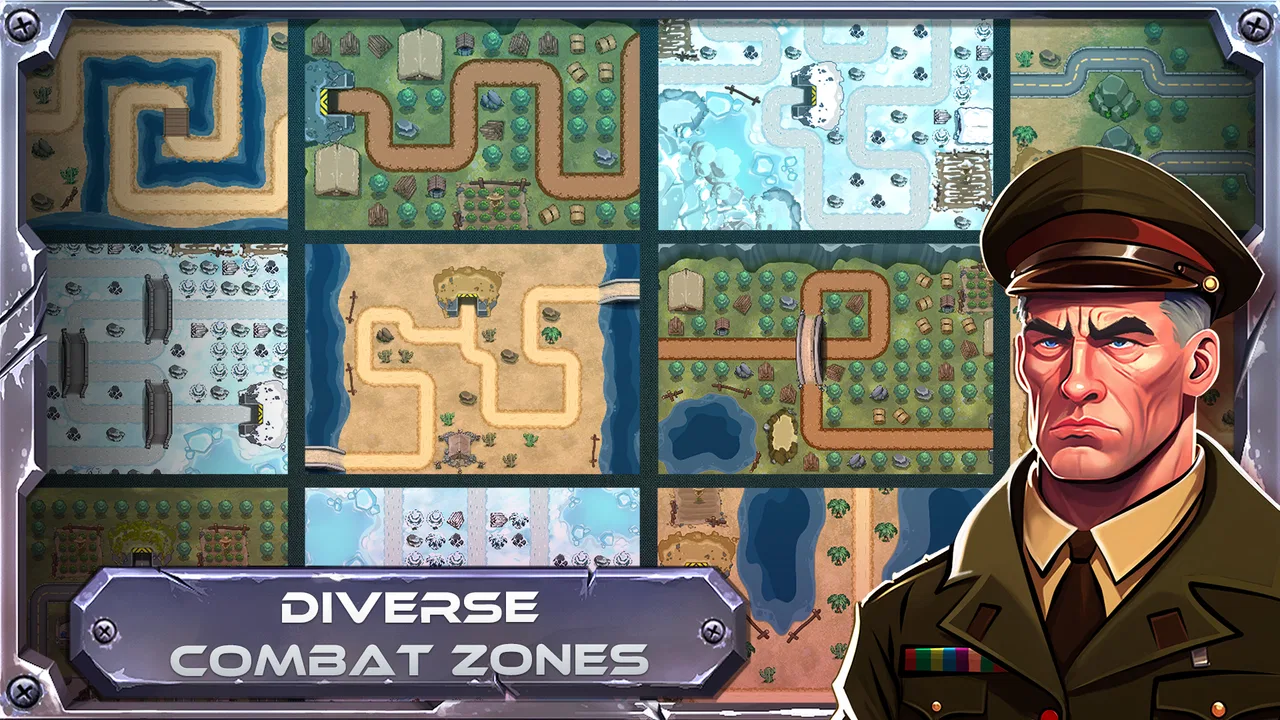
Battle Strategy: Tower Defense offers a captivating mix of strategic gameplay and dynamic tower defense mechanics. Players can enjoy a variety of towers, each with unique abilities and upgrades. The game also features multiple levels and environments, challenging enemies, and a progression system that keeps players engaged as they advance through increasingly difficult waves.
02Is Battle Strategy: Tower Defense available for both Android and iOS devices?
Yes, Battle Strategy: Tower Defense is available for download on both Android and iOS platforms. This ensures that players can enjoy the strategic challenges and tower defense action on their preferred devices, whether they are using a smartphone or a tablet.
03Does the game offer in-app purchases, and are they necessary to progress?
Battle Strategy: Tower Defense includes in-app purchases that allow players to enhance their gameplay experience, such as purchasing additional resources or unlocking special towers. However, these purchases are not mandatory for progression. Players can advance through the game by strategically using available resources and mastering the game's mechanics.
04What kind of graphics and sound quality can players expect?
Players can expect high-quality graphics with detailed environments and smooth animations in Battle Strategy: Tower Defense. The visual style is vibrant and engaging, enhancing the overall experience. The game also features immersive sound effects and a dynamic soundtrack that complements the strategic gameplay and keeps players engaged.
05Are there any multiplayer or online features in Battle Strategy: Tower Defense?
Currently, Battle Strategy: Tower Defense is primarily a single-player experience focused on strategic tower placement and defense. However, the game frequently updates, and future versions may introduce multiplayer or online features, allowing players to compete or cooperate with friends and other players globally.
Pros
- Engaging gameplay with strategic depth.
- Diverse range of towers and upgrades.
- Smooth
- intuitive user interface.
- Frequent updates with new content.
- Offline mode available for on-the-go play.
Cons
- In-app purchases can be pricey.
- Ads can interrupt gameplay.
- Limited storyline depth.
- Occasional lag on older devices.
- Requires substantial storage space.

WW2 Strategy: Tower Defense
Gallery